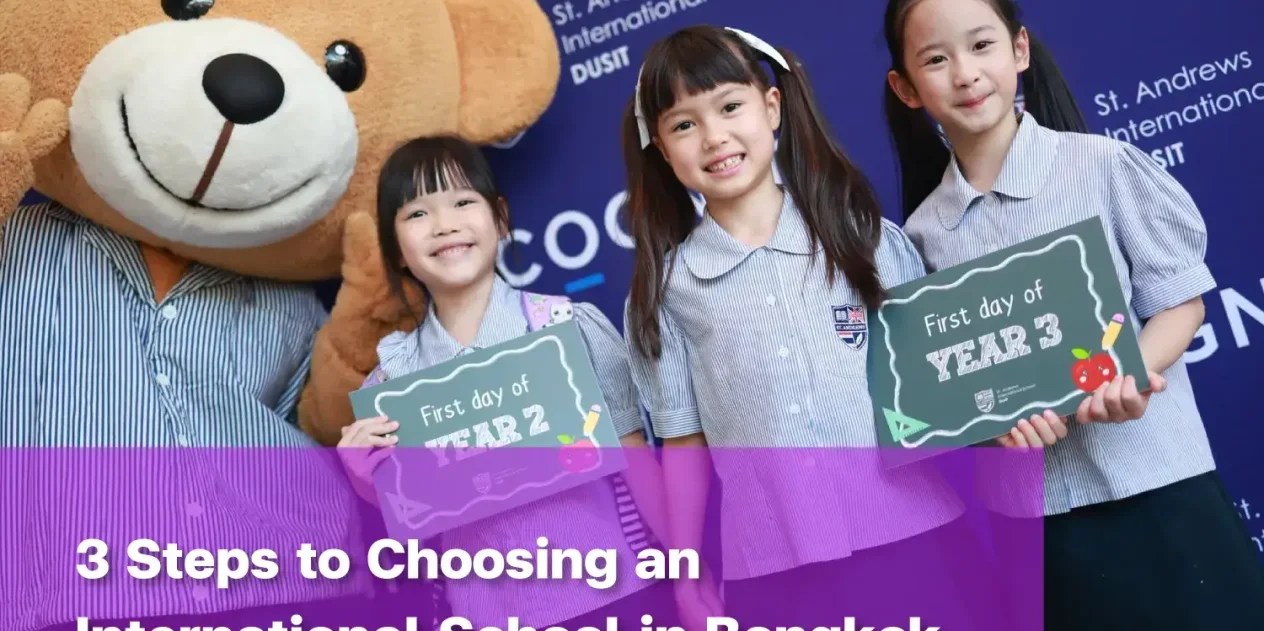
The right international school in Bangkok for your child should support not only their learning, but also their happiness and your family’s everyday life. When comparing Bangkok international schools, parents should consider several factors together, including the curriculum, individual student support, safety, overall costs and daily travel.
For families choosing an international school in Bangkok, the question is therefore not simply which school has the strongest reputation. It is about finding an environment that meets your child’s learning needs and gives them the confidence to grow, participate and enjoy school each day.
3 Steps to Choosing an International School in Bangkok That Meets Your Child’s Needs
Before deciding which international school in Bangkok may be right for your family, it is important to begin by understanding what your child needs at their current stage of development. Every child has a different background, personality and learning style.
Some initial points to consider include whether your child:
- Needs an environment that encourages them to speak English with greater confidence.
- Needs additional support with reading, writing or mathematics.
- Enjoys learning through play and practical exploration.
- Needs time to build trust with teachers and classmates.
- Needs opportunities to develop social skills and friendships.
1. Identify Your Child’s Needs Before Comparing Schools
One practical approach to choosing an international school in Bangkok is to identify 3-5 of your child’s most important needs and use the same criteria when speaking with different schools.
Questions you may want to ask include:
- How does the school monitor and assess each child’s development?
- How do teachers help new students adjust to the classroom?
- What support is available if a child is not yet confident using English?
- How frequently does the school communicate progress or concerns to parents?
- Are daily activities suitable for your child’s personality and learning style?
Parents may also find it helpful to divide their criteria into 2 groups:
- Essential needs: Factors that are important for your child’s learning, sense of security and development.
- Nice to have: Facilities, extracurricular activities and additional features.
This approach can make choosing an international school in Bangkok more focused on the experience your child will have every day, rather than making a decision-based primarily on buildings, facilities or appearance.
2. Consider Your Child’s Stage of Development
The criteria used when comparing Bangkok international schools should also reflect your child’s age and developmental stage.
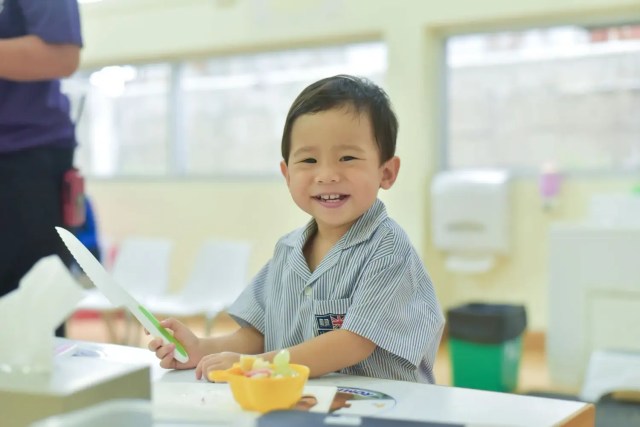
For Early Years children, parents may wish to consider:
- Daily classroom routines.
- How children are supported when separating from parents.
- The balance between play and structured learning.
- Opportunities to develop independence in everyday activities.
- How teachers build familiarity, trust and positive relationships.
For primary school children, parents may wish to consider:
- Continuity in English language development.
- Development of reading, writing and mathematics skills.
- Support when a student finds particular areas of learning challenging.
- Opportunities to develop friendships.
- How the school builds confidence and encourages classroom participation.
So, there is no single formula for choosing an international school in Bangkok. Even siblings within the same family may thrive in different environments or require different forms of support.
3. Share Information About Your Child Openly with the School
If your child is moving from a Thai school, it is helpful to share both their strengths and the areas where they may still need support. Providing specific examples can give the school a clearer understanding of how your child learns.
For example:
- They understand simple instructions in English but are not yet confident in responding..
- They can read English but need additional time to understand the meaning of a passage.
- They learn particularly well through practical activities.
- They feel nervous when speaking or completing tasks in front of a group.
- They need time to become comfortable with new teachers and classmates.
Sharing this information allows discussions with an international school admissions team to focus on the support your child may actually need, rather than reducing the assessment to whether they are simply considered “ready” or “not ready”.
International School in Bangkok: Explore the Curriculum Before Making a Decision
Curriculum is one of the most important factors when choosing an international school in Bangkok, but the reputation of a curriculum alone does not tell the whole story.
Parents should also consider how the curriculum is taught, what student support is available in the international school in Bangkok, the overall fees, and how practical the daily journey will be. Looking at these factors together makes it easier to identify a school that fits both your child’s needs and your family’s lifestyle.
International School in Bangkok and Different Curriculum Options
British Curriculum
The British curriculum sets structured learning objectives according to age and year group, covering both core academic knowledge and the development of important skills.
For example, St. Andrews International School, Dusit follows a British curriculum approach with a strong focus on individual children. Learning is connected across different areas so that students can apply what they have learnt to situations beyond the classroom.
When comparing a British curriculum, parents may wish to ask:
- How are lessons adapted to different levels of ability?
- How does the school monitor progress against age related learning goals?
- How often do children apply their knowledge through activities or projects?
- How frequently is progress communicated to parents?
International Baccalaureate Curriculum
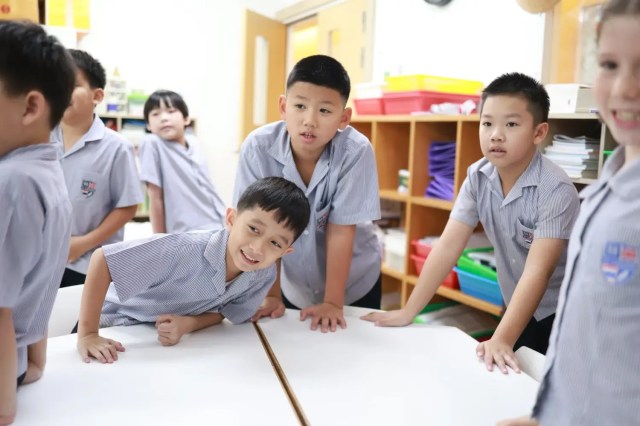
The International Baccalaureate (IB), offers programmes for different age groups and places strong emphasis on questioning, inquiry and making connections across subjects.
Students are therefore encouraged to do more than memorise information. They develop skills in thinking, analysing, communicating, researching and finding answers independently.
When considering an IB curriculum, parents may wish to ask:
- How does the school use inquiry-based learning?
- What kinds of interdisciplinary projects or activities do students complete?
- How do teachers support children who are unfamiliar with inquiry-based learning?
- How does the school assess knowledge, skills and overall development?
Both the British curriculum and the IB can provide opportunities for students to think critically, explore ideas and learn through practical experience. However, the quality of a child’s experience depends not only on the curriculum itself, but also on how it is delivered, the quality of teaching and the level of student support provided by each school.
Choose an International School in Bangkok by Looking at Student Support
If your child is not yet fluent or confident in English, another important consideration when choosing an international school in Bangkok is the support available before and after admission.
Parents may wish to ask whether the school assesses English language ability before enrolment and whether it offers English as an Additional Language, commonly known as EAL. EAL support is designed for students who use English as an additional language.
Useful questions include:
- How is a child’s English proficiency assessed before admission?
- Is EAL support provided within the classroom or separately at certain times?
- Are there additional fees for EAL support?
- How does the school monitor and report language development?
- What criteria are used to determine when a student no longer requires additional support?
Plan for Fees and Daily Travel
When researching an international school in Bangkok and its fees, parents should avoid comparing tuition fees alone. Published tuition figures may not include every cost that arises during the academic year.
Additional costs may include:
- Application and assessment fees.
- Admission or registration fees.
- Deposits.
- School transport.
- Meals.
- Uniforms and learning materials.
- Activities or school trips.
- Additional student support services.
To compare more clearly, it can help to organise costs into 3 categories:
- Initial costs: Application fees, admission fees and deposits.
- Recurring costs: Tuition fees, meals, transport and uniforms.
- Usage based costs: Extracurricular activities, trips or specialist support services.
If one international school in Bangkok includes meals within its tuition fees while another charges separately, parents should adjust their comparison so that it covers the same services.
Refundable deposits should also be separated from other fees, although families will still need to include them when calculating how much money is required at the time of enrolment.
Travel is another practical consideration when comparing Bangkok international schools. The daily journey can affect a child’s waking time, rest, energy levels and ability to take part in after school activities.
Before making a final decision, parents may find it helpful to test the journey during the actual school run and consider:
- How long does it take to travel between home and school?
- How different is the traffic during morning drop off and afternoon pick up?
- What drop off and pick up procedures are in place?
- Is there a member of staff supervising students on the school bus?
- How are parents informed if school transport is delayed?
- Would transport arrangements need to change on days with after school activities?
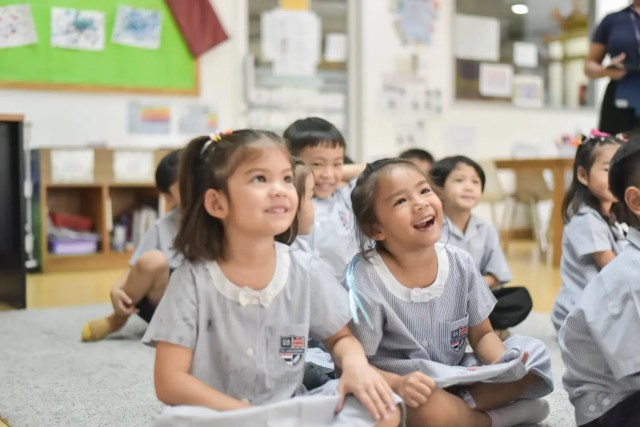
3 St. Andrews International Schools in Bangkok to Consider
St. Andrews International School, Dusit
St. Andrews International School, Dusit is a British international school for children aged 2 to 11. The school places importance on understanding each child as an individual while creating an environment where students can feel happy, secure and part of the learning community.
Features that parents may wish to consider include:
- A British curriculum that connects learning with the Thai context.
- Support for academic learning, relationships and individual expression.
- Opportunities to learn through thinking, practical activities and outdoor experiences.
- An environment that encourages students to build confidence and participate actively in class.
St. Andrews International School, Sathorn
St. Andrews International School, Sathorn welcomes children aged 2 to 11 and follows the English National Curriculum. It is another option for families choosing an international school in Bangkok, particularly those living in Sathorn and surrounding areas.
As with any international school in Bangkok, parents should consider not only the curriculum but also the school environment, student support, daily travel and the overall experience their child is likely to have.
St. Andrews International School, Sukhumvit 107
St. Andrews International School, Sukhumvit 107 provides education from Early Years through to Sixth Form, making it an option for families who wish to plan their child’s education within the same school community over a longer period.
If a family plans for their child to begin at Dusit or Sathorn and potentially continue at Sukhumvit 107 later, it is advisable to speak directly with the schools about the application process, admissions criteria, internal transfer arrangements and any relevant conditions.
Frequently Asked Questions About International Schools in Bangkok
Q: How do I know which international school in Bangkok is right for my child?
A: When choosing an international school in Bangkok, consider the curriculum, teaching approach, student support, costs, location and your child’s individual learning style. A decision should not be based on reputation or facilities alone. The most suitable international school in Bangkok should support your child’s development while also fitting realistically into your family’s everyday life.
Q: Which curriculum should I choose for my child?
A: The right international school in Bangkok and curriculum depend on your child’s learning style and future education plans. A British curriculum provides clearly structured learning expectations for different age groups, while the IB places strong emphasis on inquiry, research and connecting knowledge across different subjects. Parents should also consider how each school delivers its chosen curriculum, how teachers support individual students and what learning facilities are available.
Q: What costs should I consider about international schools in Bangkok apart from fees?
A: In addition to tuition at an international school in Bangkok, fees may include application fees, admission fees, deposits, meals, school transport, uniforms, learning materials, trips and extracurricular activities. Parents should request a complete list of costs for their child’s year group and compare the total annual cost across Bangkok international schools on a like for like basis.
Conclusion
Choosing an international school in Bangkok should begin with your child’s needs, personality and learning style. Parents can then compare the curriculum, student support systems, fees and daily travel requirements to build a complete picture of each school.
Visiting the schools in person, speaking with admissions teams and asking questions that relate specifically to your child can provide valuable insight. The best international school in Bangkok for a particular family is not necessarily the one with the most famous name or the largest range of facilities. It is a school where a child can enjoy learning, receive appropriate support and have meaningful opportunities to develop their abilities and confidence every day.